Signs you need extraction
- Standing water of any depth on a floor, slab or crawlspace
- Carpet that squishes underfoot or darkens at the edges
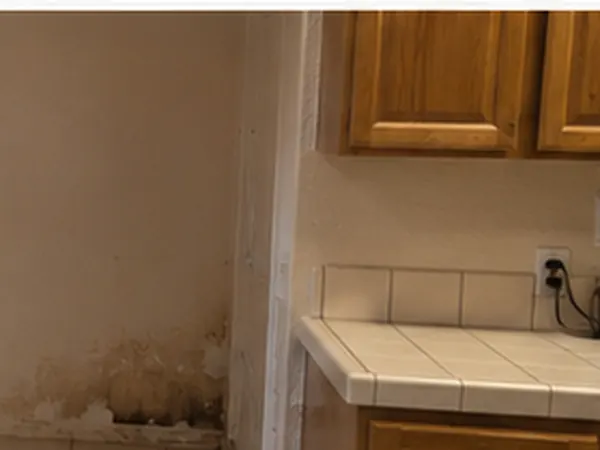
- Baseboards or drywall that feel soft, swollen or cold to the touch
- A sound of dripping inside a wall or ceiling cavity
- Sudden musty odor in a room that was dry the day before
Why extraction matters on a wet, sloped island
Rainfall of roughly 39 to 42 inches a year keeps island soil wet for months, so a flooded lower level has little chance to drain naturally. Water that sits on a daylight basement slab or a finished floor wicks into baseboards and framing within hours.
Many homes here have multi-level layouts with hardwood or stone on the main floor, which means water from an upstairs failure can travel through several rooms before anyone notices. Extraction followed by a full moisture survey finds the wet areas that stayed out of sight.
How extraction works
Safety walk-through
The crew confirms the water source is off, identifies nearby electrical hazards and decides whether the water is clean, gray or black before touching anything.
Bulk water removal
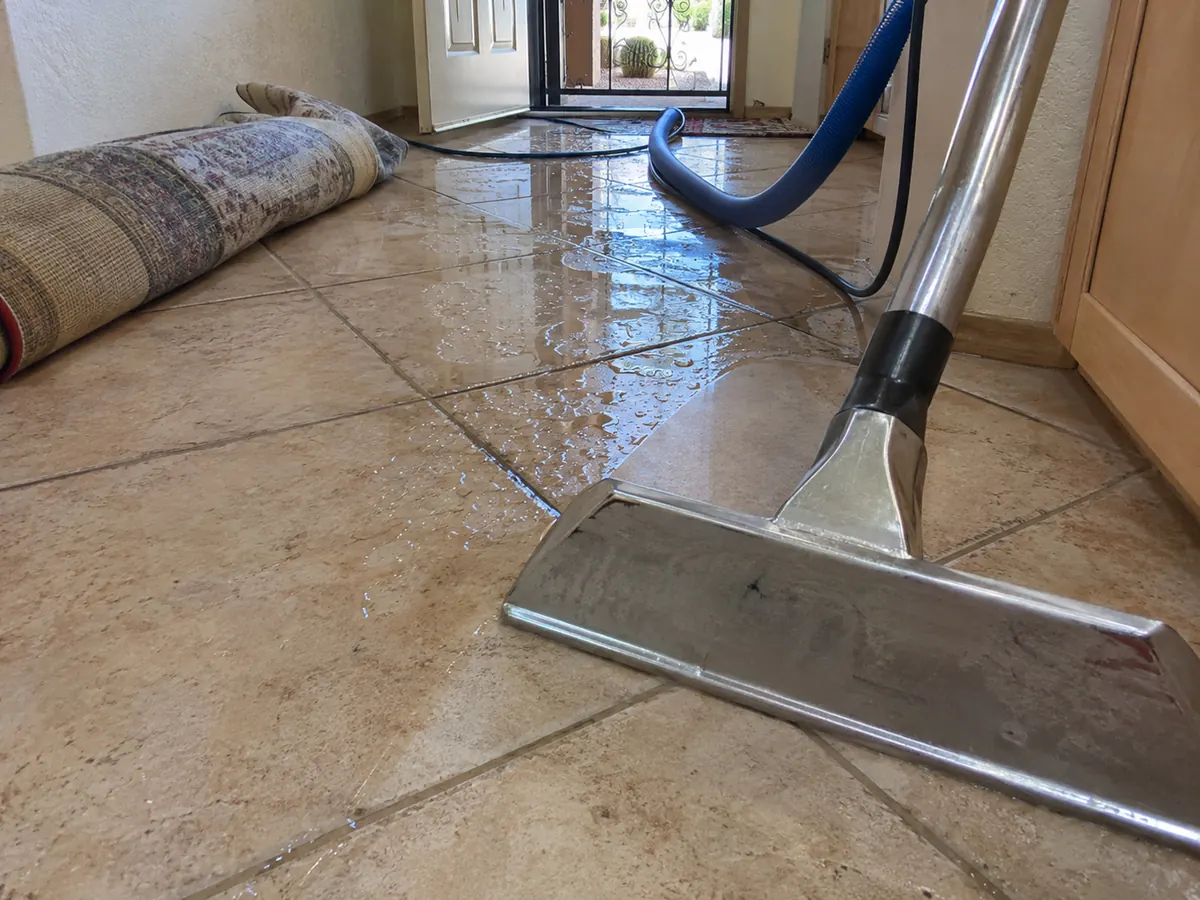
Submersible pumps handle deep water, and wand extractors pull the remaining water from carpet, pad and hard floors.
Moisture mapping
A pin and pinless meter plus a thermal camera trace wet areas behind baseboards, under cabinets and along exterior walls.
Selective material removal
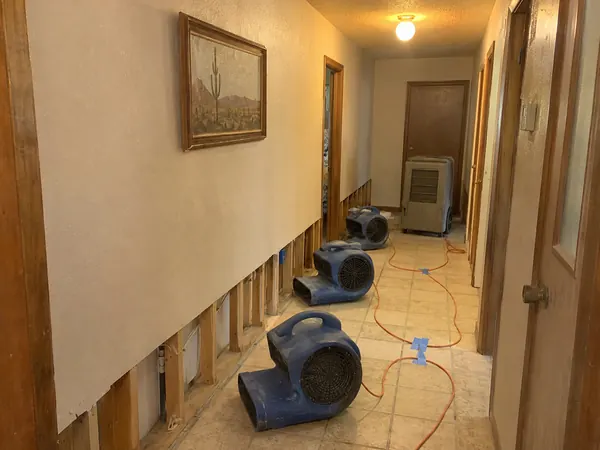
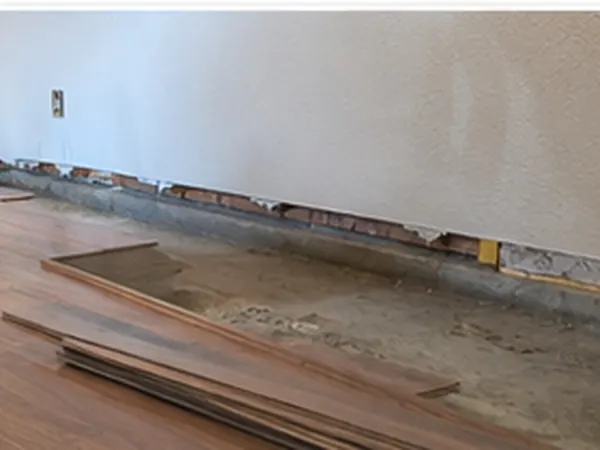
Pad, soaked insulation and damaged baseboards are taken out when drying in place is not realistic, which opens the cavity to air flow.
Handoff to drying
Air movers and dehumidifiers go in, the starting readings are logged, and a visit schedule is set for checking progress.
Problems that show up after a flood
Water trapped under flooring
You see Hardwood cups or planks lift at the seams a few days later
What helps Floor drying mats pull moisture from the subfloor, and damaged boards are replaced after drying
Wet insulation inside walls
You see Baseboards feel cold and the wall reads high on a moisture meter
What helps Small inspection holes allow airflow, and soaked insulation is replaced
Water in the crawlspace
You see Joists show damp patches and the air smells earthy
What helps The space is pumped, dried and ventilated, and the entry point is traced before a vapor barrier goes back down
What to do before the crew arrives
- Shut off the main water valve or the fixture that is leaking
- Switch off breakers to wet rooms only if you can reach the panel on dry ground
- Lift rugs, books and small furniture onto dry surfaces
- Photograph each room and the source of the water for your insurer
- Open interior doors to give air a path, but leave the heating system alone
After rain, check the foundation line
Look along the base of exterior walls the day after a heavy storm for damp lines or small puddles at corners. Early signs let a crew extract a few gallons instead of hundreds, and they point to a drain or grading fix worth scheduling before the next wet season.
Tools for this problem
What extraction does not cover
We do not: Extraction removes water, but it does not repair the pipe, appliance or roof that let the water in, and it does not rebuild finishes.
Call instead: Call a licensed plumber for the leak and a general contractor for rebuilding after drying is complete.
Typical Water Extraction & Flood Cleanup cost in Mercer Island, WA
Extraction cost follows the wet area and the water category, with deep water or sewage raising labor and disposal needs.
| Job type | Typical estimate |
|---|---|
| One room of clean water | $900 to $2,500 |
| Several rooms or a finished basement | $2,500 to $7,000 |
| Whole level with flooring removal | $7,000 to $18,000 |
| Add-on for gray or black water | $1,500 to $5,000 |
Typical estimates, not guaranteed prices. Call for an exact quote.
Questions people ask
[Cost] What decides the price of water extraction?
Wet square footage, water depth, the water category and how many finishes must come out drive the price. Estimates here usually start near $900 for one room and climb as more rooms are affected.
[Timing] How long does extraction take?
Pulling water from one room usually takes a few hours. Larger floods, deep basements and sewage jobs run longer, and the drying phase that follows takes several more days.
[Insurance] Will insurance pay for extraction?
Sudden and accidental releases such as a failed supply line are often covered, while rising groundwater and sewer backup often are not without an endorsement. Photograph everything and ask your insurer what applies.
[Safety] Can I walk through standing water?
Avoid it until power to the area is off, because water and live circuits are a shock risk. Floodwater or sewage may also carry bacteria, so wear boots and gloves if you must enter.
[Process] Do you remove carpet during extraction?
Carpet is often saved when the water was clean and removal began quickly, though the pad is usually discarded. Gray or black water means the carpet goes as well, since cleaning cannot make it safe.