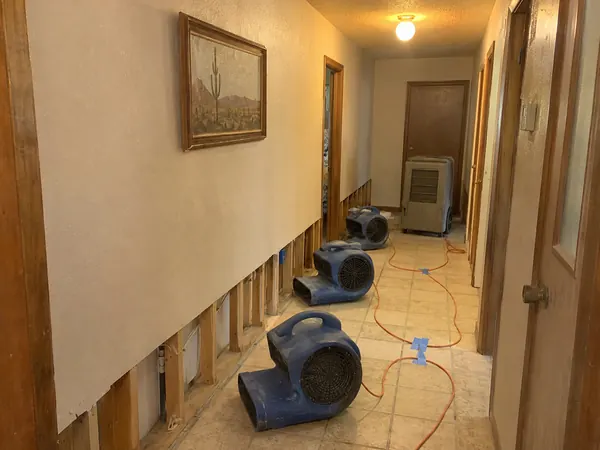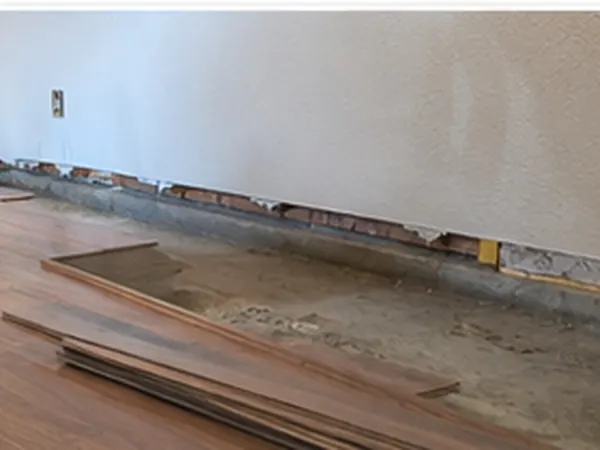
Typical drying days by material
| Material | With commercial equipment |
|---|---|
| Carpet and pad | 3 to 5 days |
| Drywall | 3 to 5 days |
| Hardwood | 5 to 7 days |
| Plaster | 6 to 8 days |
| Block or brick | 7 to 9 days |
| Concrete slab | 10 to 12 days |
Humid weather, a late start, large areas and household equipment all add days.
How the drying guide works
Each material has a base number of days, with extra time added for humid seasons and for water that sat for a day or more. Wet-season outdoor air on the island is usually humid, so dehumidifiers do most of the work from autumn to spring.
The guide is a planning aid and not a drying plan, since real timing depends on equipment, building layout and moisture readings taken on site. Your crew should confirm dry standards with meters.
Drying time questions
[Process] Why does concrete take longer to dry?
Concrete is dense and holds moisture deep inside, and it releases it slowly. A basement slab can take a week or more, and drying too fast can leave moisture that affects flooring later.
[Cost] Can I speed up drying with open windows?
Usually not in the wet season, because outdoor air is humid and can add moisture. Keeping the building closed and using dehumidifiers is the more reliable way to dry on schedule.
[Safety] How do I know drying is finished?
Readings on each material match a dry reference taken from an unaffected area. The crew shows you the logs, and equipment comes out only after all measured points reach the standard.